
❋
October 3-7 | Starting at $500The Reset Retreat: Yucca Valley
Temple Rituals and Ceremonies
The Living Traditions of Taoist Practice
Ritual at the Heart of Taoist Life
Within Taoist temples, ritual and ceremony form the living expression of Taoist philosophy. While sacred texts such as the Tao Te Ching and Zhuangzi describe the nature of the Tao, temple rituals transform those teachings into communal practice.
For centuries, these ceremonies have connected practitioners with the natural rhythms of the universe, the spiritual realm, and their local communities. Through incense offerings, chanting, music, and symbolic gestures, Taoist rituals aim to restore harmony between heaven, earth, and humanity.
Rather than being purely symbolic, ritual practice is understood as a way of aligning human life with the natural order described in Taoist teachings.
The Structure of Taoist Ritual
Taoist ceremonies follow a structured sequence that combines prayer, music, symbolic movement, and sacred offerings.
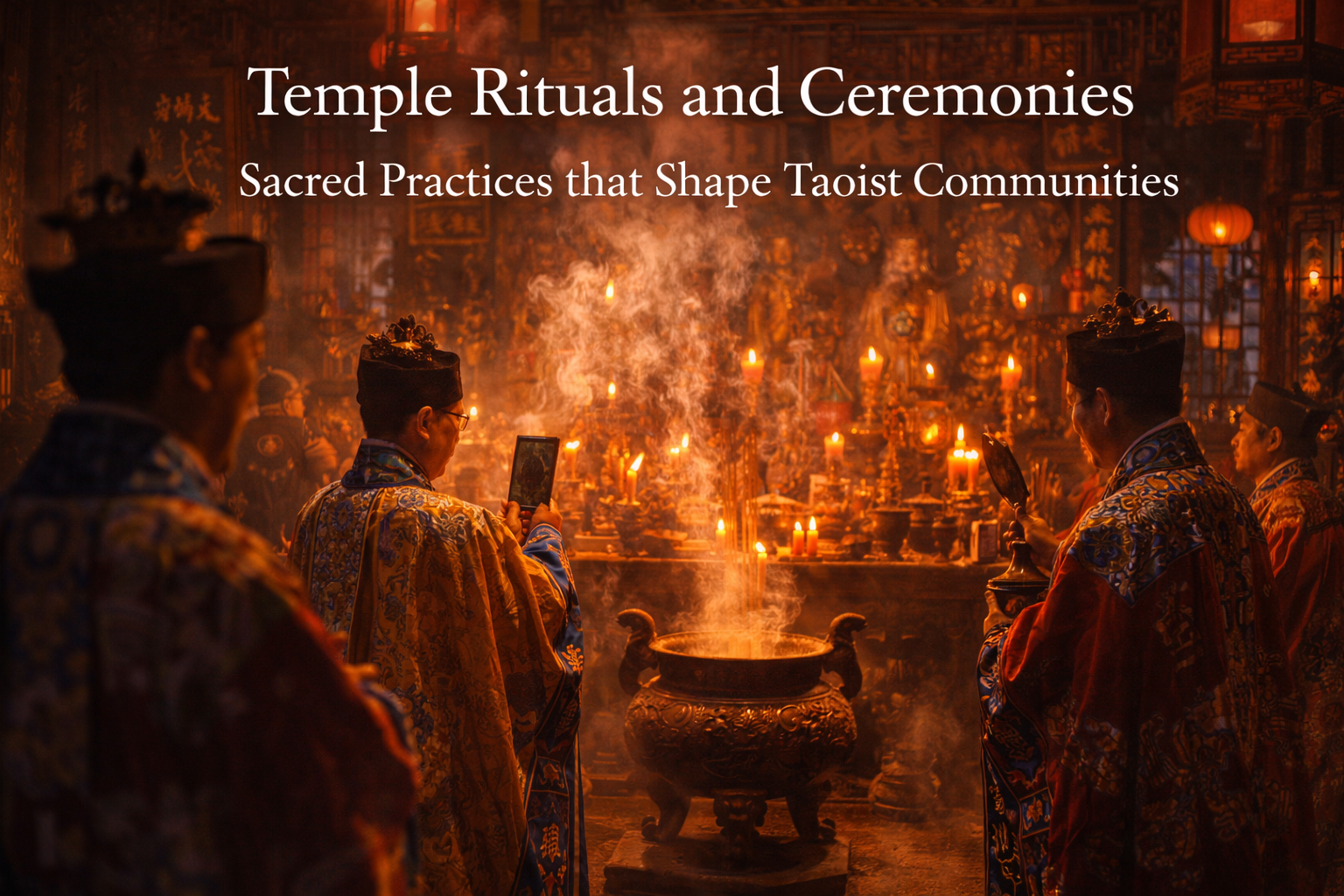
Most rituals take place within temple halls where altars are dedicated to Taoist deities, immortals, and cosmic forces. Priests wear ceremonial robes decorated with traditional patterns that represent harmony between the spiritual and earthly realms.
The ceremony often begins with purification rituals, where incense and sacred instruments are used to prepare the space for spiritual activity.
Incense and Sacred Offerings
One of the most recognizable elements of Taoist ritual is the offering of incense.
Lighting incense symbolizes the connection between the human world and the heavens. As the smoke rises, it represents prayers and intentions carried upward toward the spiritual realm.
Offerings placed at temple altars may include:
fruit and tea
flowers
candles and incense
symbolic ritual objects
These offerings express gratitude and reverence while inviting harmony and protection.
Ritual Music and Chanting
Music plays an essential role in Taoist ceremonies. Bells, drums, flutes, and gongs create rhythmic patterns that guide the progression of ritual.
Priests chant sacred texts using melodic tones that have been preserved for centuries. The sound of chanting is believed to harmonize the surrounding environment and focus the minds of participants.
In many ceremonies, the combination of music and chanting creates an atmosphere that encourages meditation and spiritual reflection.
Ceremonies for Community and Balance
Taoist rituals are not performed solely for individual spiritual development. Many ceremonies are conducted on behalf of entire communities.
These rituals may be held to:
bless villages and families
honor ancestors
restore balance after illness or misfortune
celebrate seasonal festivals
Through these shared ceremonies, temples strengthen social bonds and reinforce cultural traditions that connect communities across generations.
Festival Rituals and Public Celebrations
Temple rituals become especially vibrant during traditional festivals. Lantern festivals, seasonal celebrations, and temple anniversaries often include large public ceremonies that combine ritual practice with music, dance, and cultural performances.
During these events, temple courtyards fill with visitors who participate in prayers, offerings, and celebrations that have been passed down through centuries of Taoist tradition.
These festivals transform the temple into a place where spiritual practice and community celebration merge.
Preserving Ancient Traditions
Despite social and political changes throughout history, Taoist rituals have continued to evolve while maintaining their core structure.
In many temples today, priests still perform ceremonies that follow ritual manuals written hundreds of years ago. At the same time, temples have adapted to modern life by welcoming visitors, teaching traditional practices, and hosting cultural events.
Through this balance of preservation and adaptation, Taoist ritual traditions remain a vibrant part of contemporary spiritual life.
Ritual as Living Philosophy
At its core, Taoist ritual practice reflects the philosophy that harmony must be actively cultivated in both the spiritual and human worlds.
By participating in ritual, practitioners express respect for the forces of nature, honor ancestral traditions, and strengthen the bonds that unite communities.
In this way, temple ceremonies serve as living reminders that the Tao is not only a philosophical concept but a path that unfolds through shared practice, reflection, and reverence for the natural order.